
Lift Support Rod · Non-Locking
Compression Gas Springs
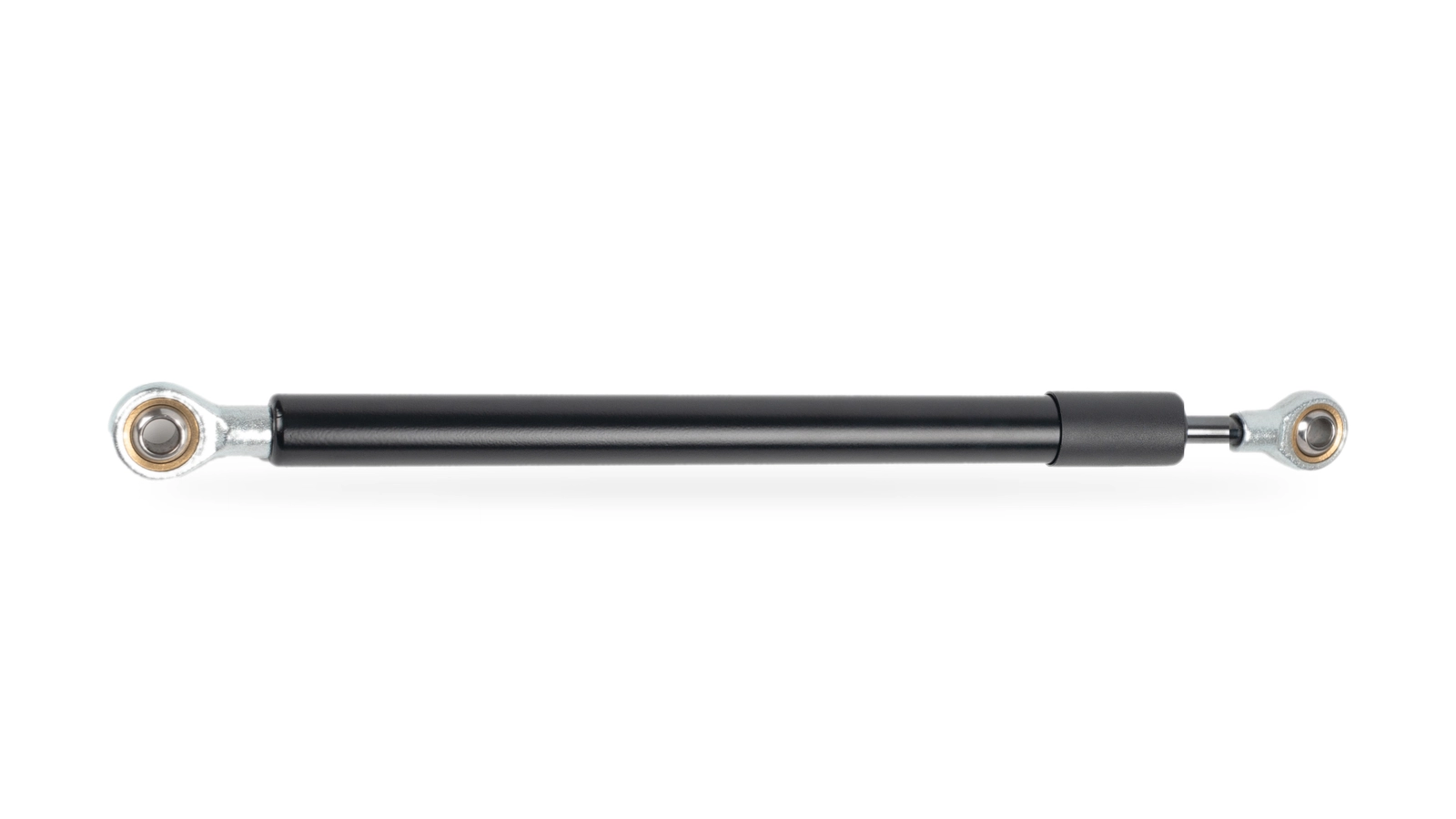
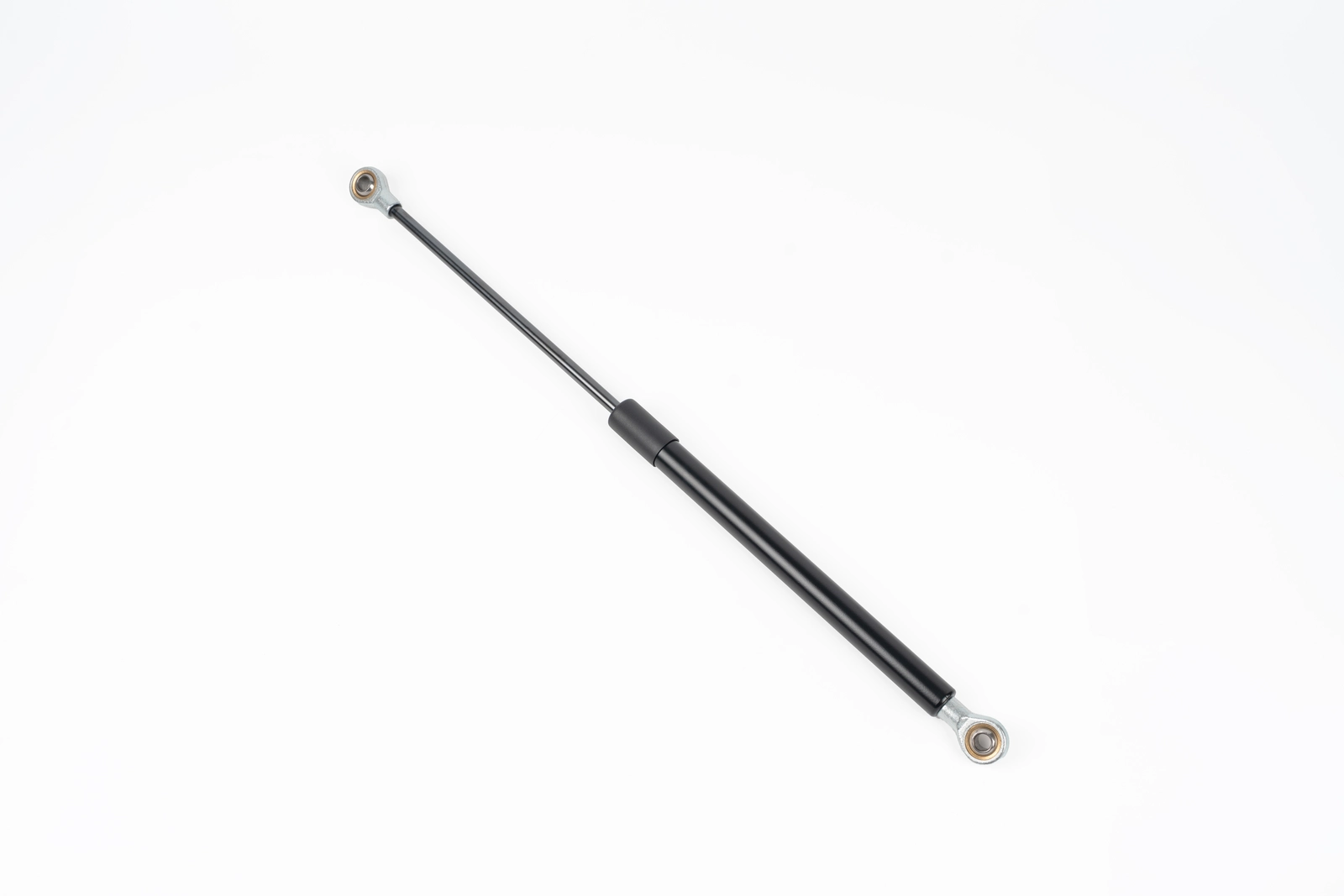
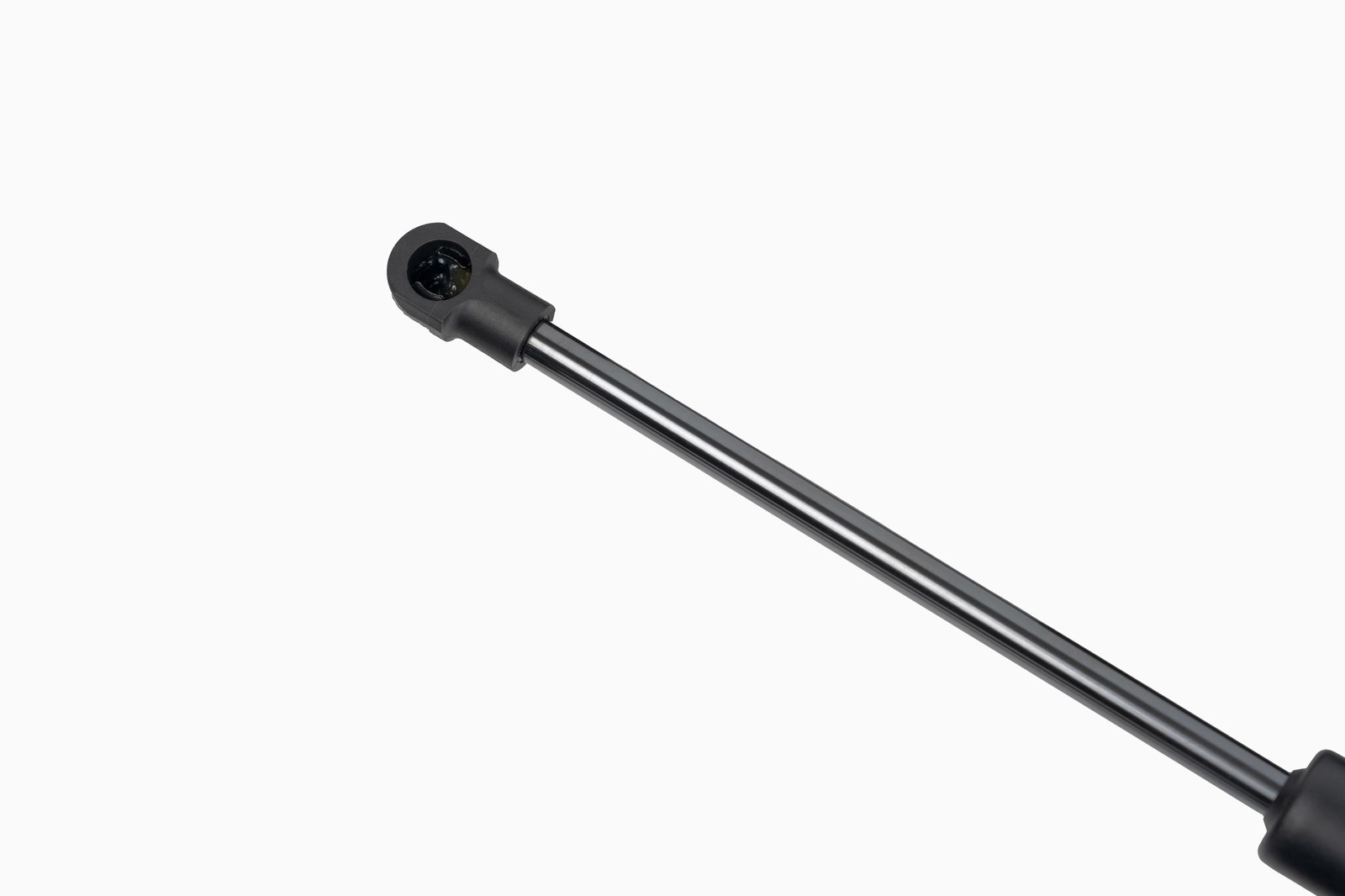
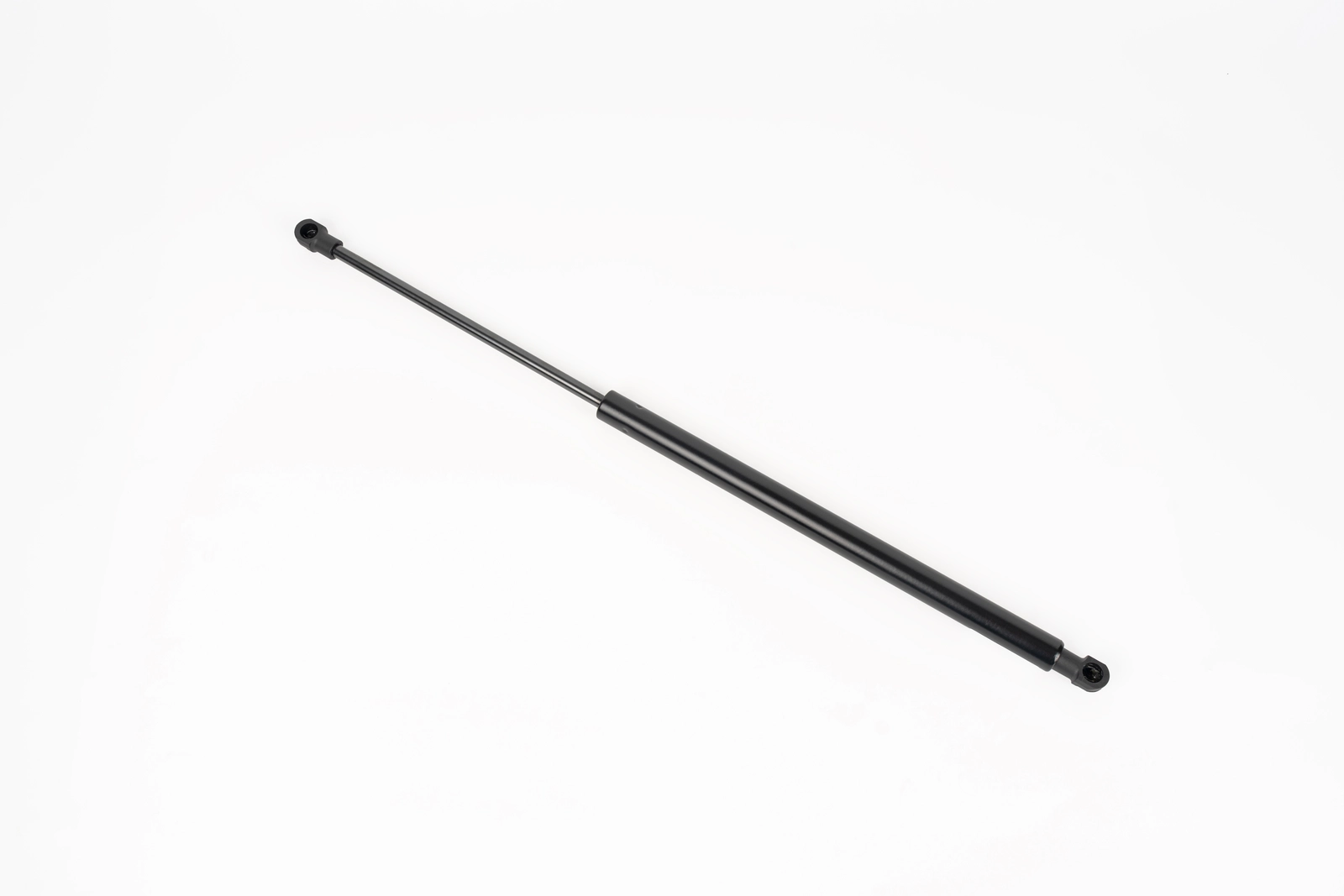
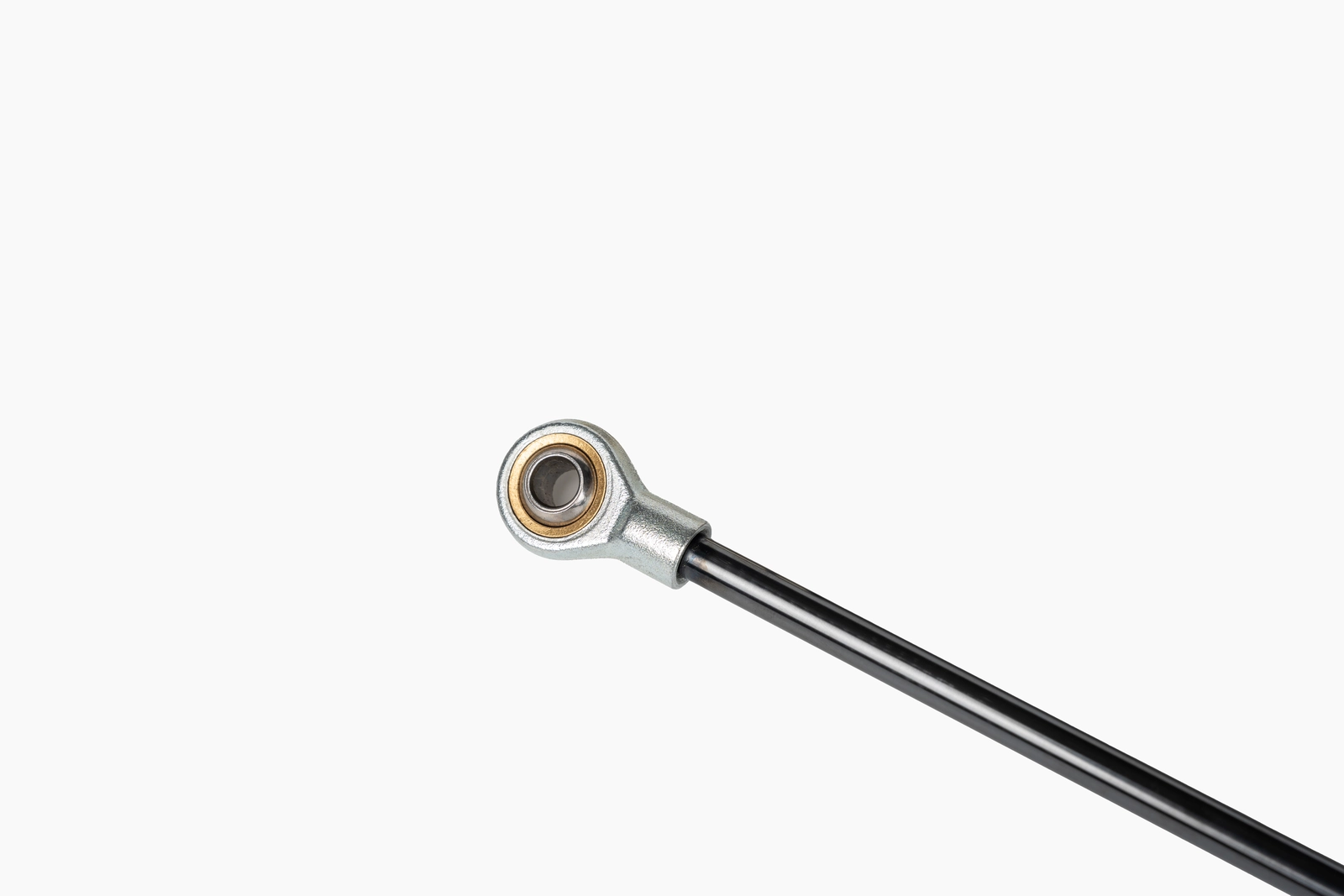
Newton manufactures custom compression gas struts from compact 4 mm mini gas springs up to 2,000 N heavy duty lift support struts, engineered to your exact stroke, force and mounting geometry.
- Smooth, self-extending lifting force with hydraulic end cushioning
- Four rod sizes: mini 4 & 6 mm, standard 8 mm, heavy duty 12 mm
- Custom 40–450 mm strokes, 15–2,000 N force, metal or plastic fittings
- 4, 6, 8 or 12 mmPiston rod diameter
- 40–450 mmStroke length
- 15–2,000 NForce rating
- Non-lockingContinuous lift support
Overview
Steady lifting force from mini lids to heavy hatches
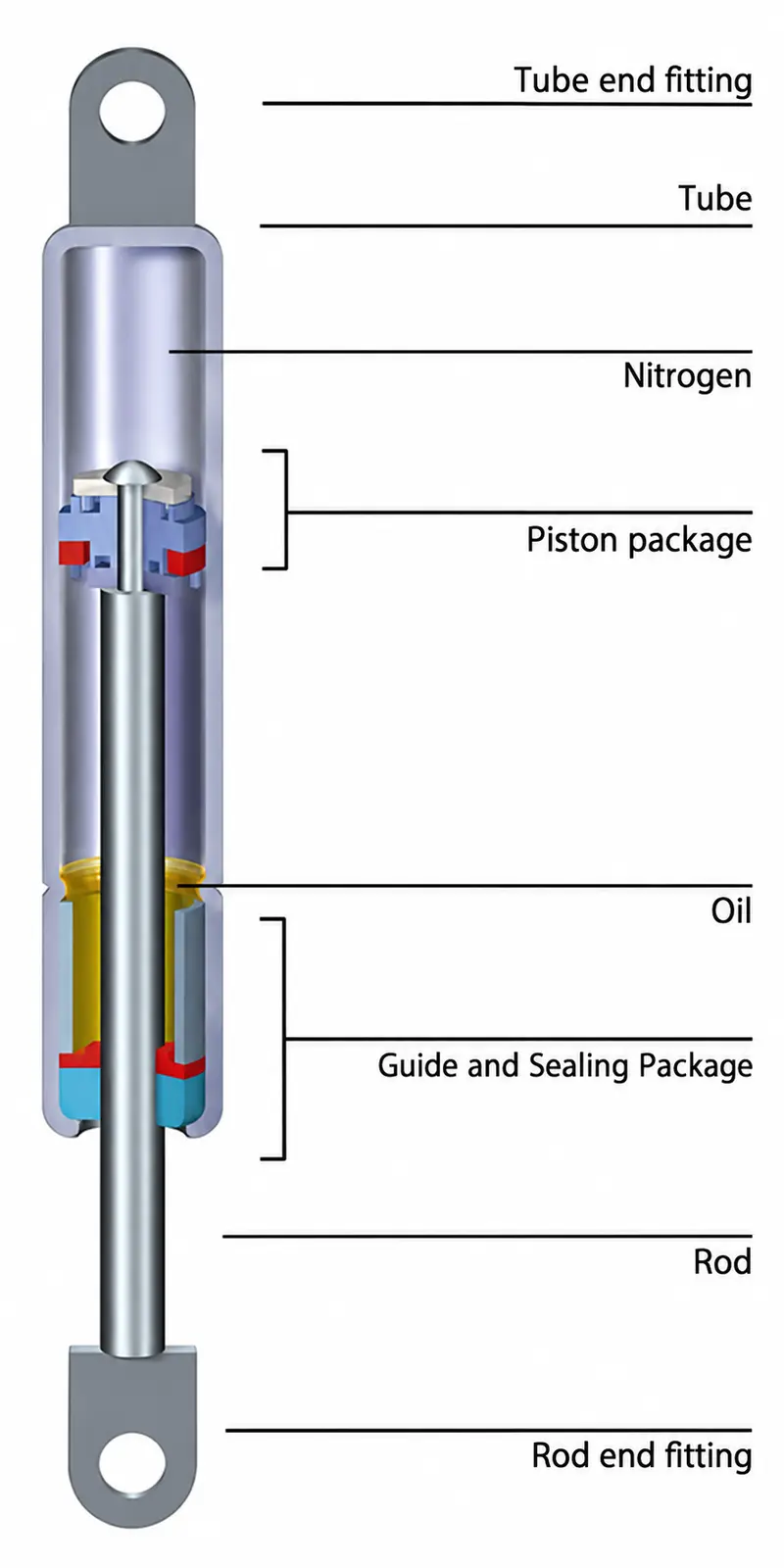
A compression gas spring—often called a lift support strut or gas support rod—is a self-contained hydropneumatic cylinder that counterbalances weight without external power or bulky mechanical springs. Charged with high-purity nitrogen gas and a calibrated measure of damping oil, it extends automatically when unlatched to lift hinged panels smoothly and hold them safely open.
Unlike coil springs whose force drops sharply as they extend, a compression gas strut delivers a steady, predictable force curve right across its stroke, followed by gentle hydraulic braking over the final millimetres of travel to protect hinges and frames from slam loads. Whether you need a small gas strut with a 4 mm rod for an electronics enclosure or a 12 mm heavy duty gas spring rated to 2,000 N for an industrial access hatch, we manufacture each unit to your exact specification.
Need help working out the right geometry and Newton rating? We also manufacture lockable gas springs — including elastic locking and rigid locking models — if your application needs to stop and lock mid-stroke.
-
Compress on closing
Closing the lid, hood or door pushes the piston rod into the cylinder, compressing the internal nitrogen charge to store potential energy.
-
Assist on opening
Release the catch and the pressurized gas acts on the piston cross-section, extending the rod with a steady lifting force.
-
Cushion at full extension
As the rod nears the end of its stroke, internal oil flows through a metering orifice to slow the final travel and hold the panel securely open.
Key Features
Why choose Newton compression gas struts
-
Steady lifting force
Engineered gas-to-tube volume ratios keep lifting assistance smooth and controlled from closed to open.
-
Mini to heavy duty
Four rod sizes (4, 6, 8 and 12 mm) spanning 15 N mini gas springs up to 2,000 N heavy duty gas struts.
-
End-stroke damping
Internal hydraulic oil cushions the final stage of extension to prevent jarring stops and hinge fatigue.
-
Custom OEM builds
Charged to your exact Newton force with custom lengths, five finishes and interchangeable end fittings.
Specifications
Compression gas spring specifications
Every lift support strut is built to order. Use these core ranges and diagrams to specify your assembly.
| Parameter | Range / options | Notes |
|---|---|---|
| Operation type | Non-locking support rod | Continuous self-extending lift assistance; no mid-stroke locking valve. |
| Fill | Nitrogen gas + damping oil | Inert nitrogen provides lifting force; oil lubricates seals and cushions full extension. |
| Piston rod diameter (d) | 4 mm, 6 mm, 8 mm or 12 mm | 4 & 6 mm for mini/small gas struts; 8 mm for standard lids; 12 mm for heavy duty loads. |
| Stroke length (S) | 40–450 mm | Matched to the opening angle and hinge geometry of your door, hood or hatch. |
| Force rating (F1) | 15–2,000 N | Factory-charged to your exact nominal extension force requirement. |
| Outer tube (D) | Matched to rod series | Cylinder outside diameter scaled to rod size and required gas volume. |
| Cylinder body length (B1) | To order | Outer tube length sized to accommodate stroke travel and damping zone. |
| Extended length (B) | To order | Overall mounting length with the piston rod fully extended. |
| Finish colours | Black, silver grey, white, chrome, light grey | Corrosion-resistant rod and cylinder finishes for indoor or outdoor service. |
| End fittings | Single-ear, double-ear, pull-switch | Available in metal for high-load hinges or engineered plastic for lightweight assemblies. |
| Applications | Automotive, furniture, medical, industrial, aerospace, rail | Vehicle hoods & trunks, overhead cabinets, machine enclosures, medical covers & access panels. |
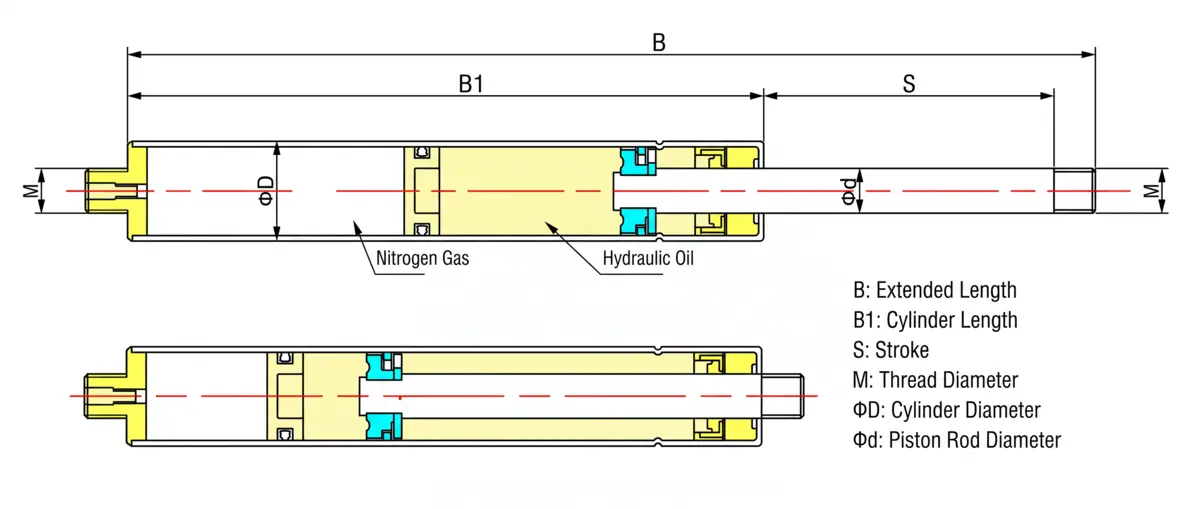
Schematic, Force Curve, Sizing Guide & Dimension Key
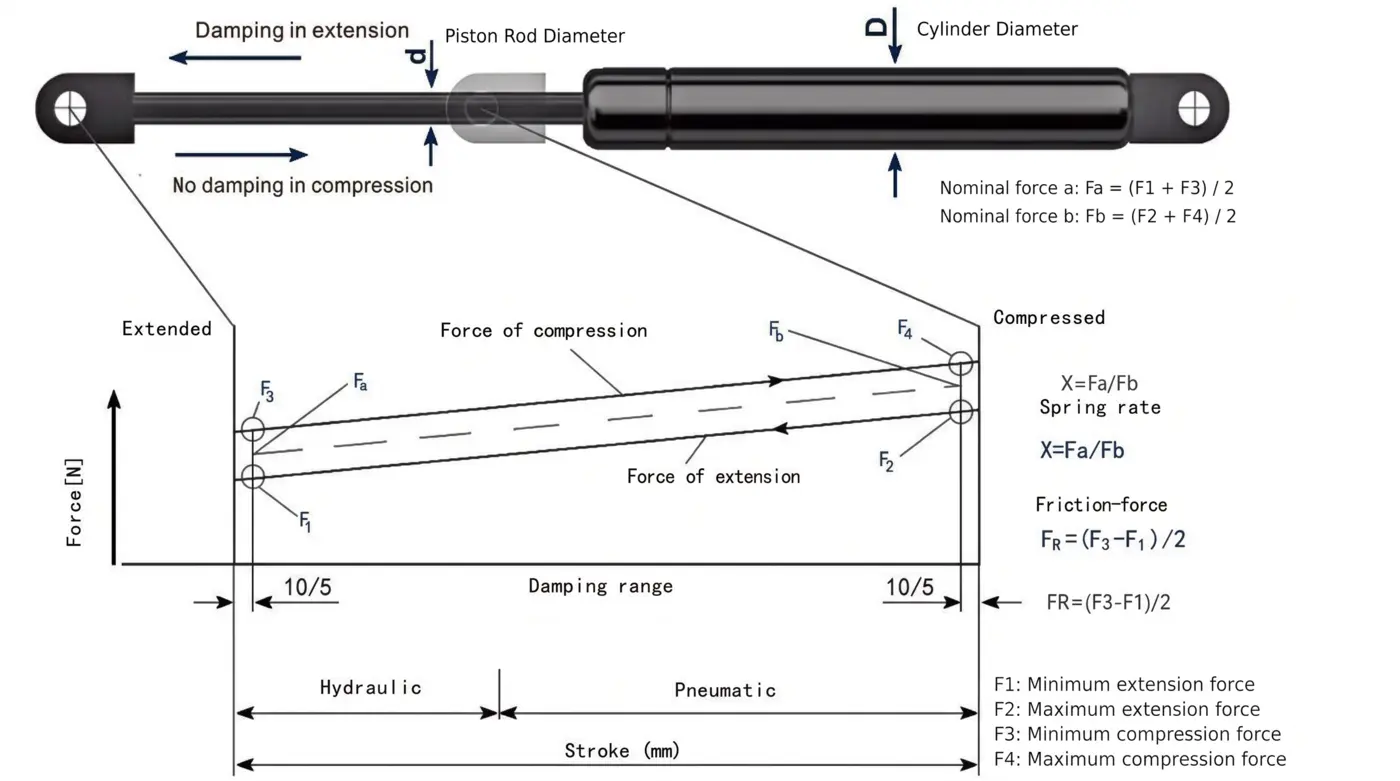
Use the dimensional drawing, force-stroke progression chart and model selection guide below alongside the symbol key when specifying your compression gas spring.
- B
- Extended lengthOverall length, rod fully extended
- B1
- Cylinder body lengthLength of the outer tube
- S
- StrokePiston rod travel distance
- D
- Cylinder diameterOutside diameter of the outer tube
- d
- Rod / hole diameterPiston rod diameter (or eyelet through-hole)
- M
- Mounting threadThread size on rod and cylinder ends
- F1
- Extension forceNominal gas force with the rod extended
- F2
- Compressed forceGas force with the rod fully compressed
- FR
- Friction forceDynamic resistance difference between directions
Configuration
Build it your way
Select the surface finish, end fittings and rod sizing that match your lid weight and mounting brackets.
-
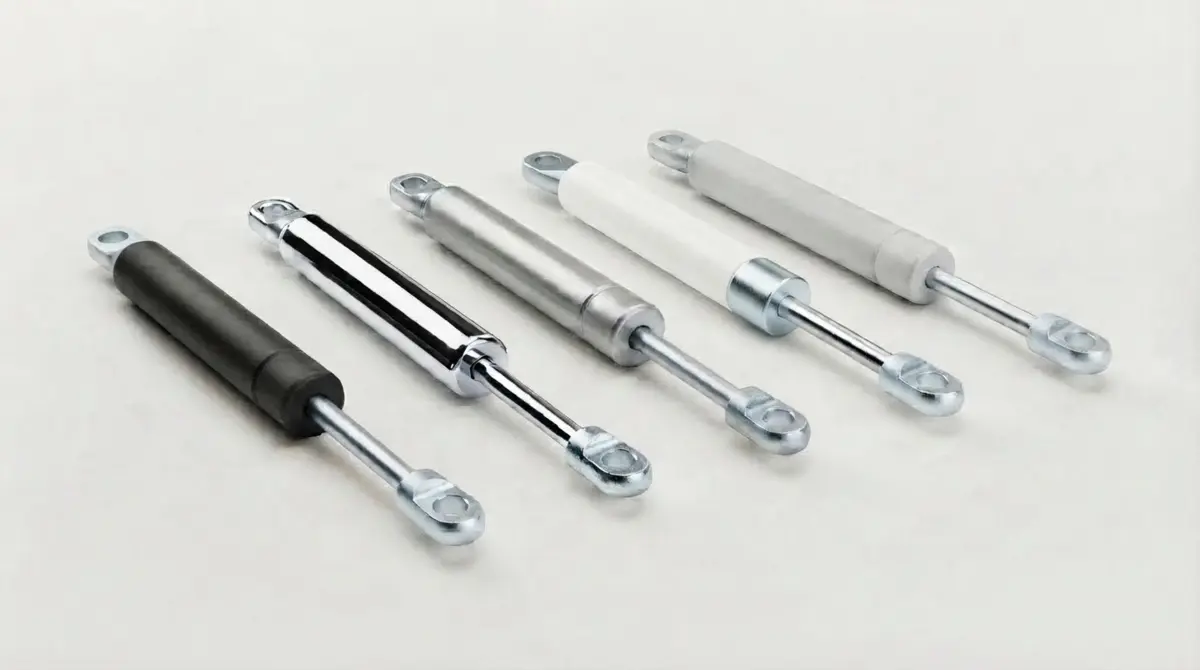
Finish & Colour
Durable surface treatments engineered for appearance, wear resistance and corrosion protection.
- Black or bright chrome
- Silver grey or light grey
- Clean white for medical & marine cabinets
-
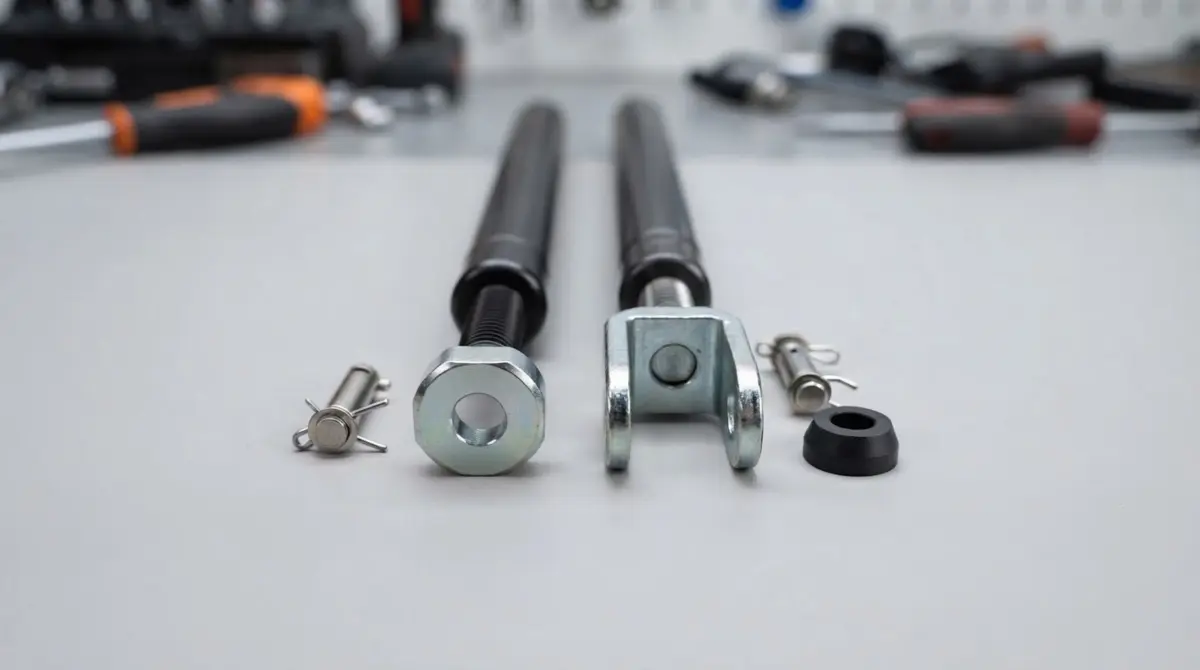
End Fittings
Thread-on connectors in steel/metal for high-load hinges or moulded plastic for light doors.
- Single-ear eyelet: simple single-pin pivot mount
- Double-ear clevis: twin-lug fork for stable alignment
- Custom OEM brackets & end fittings
-
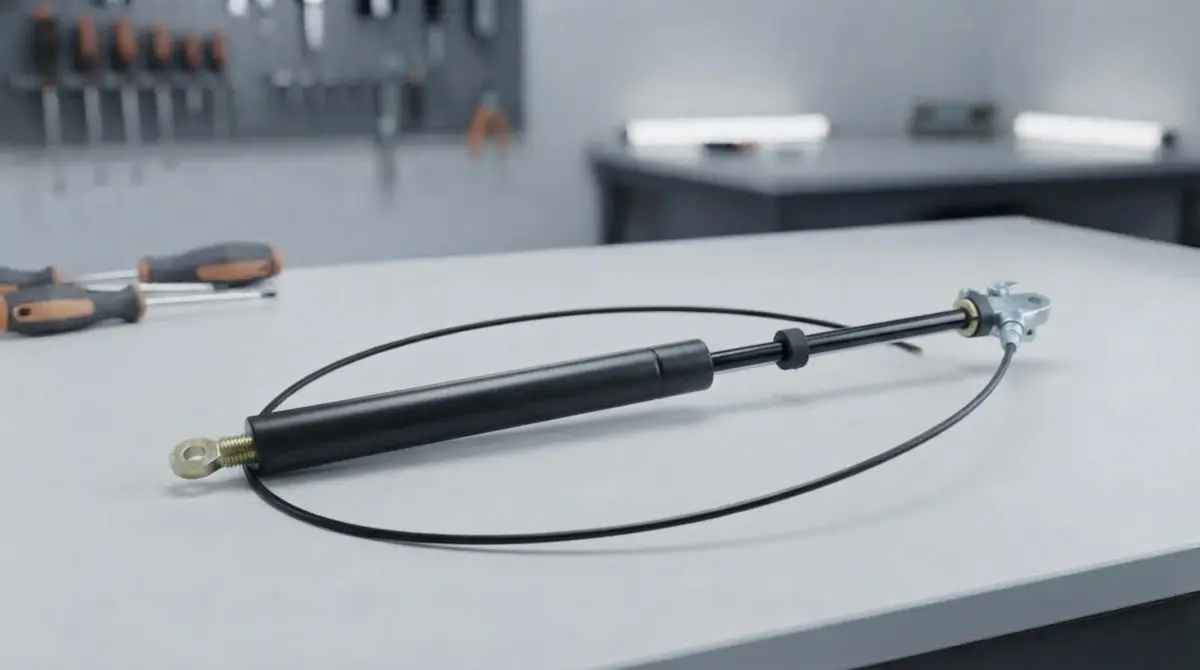
Sizing, Damping & Mounts
Tailored internal damping and rod diameters to suit everything from small lids to heavy hatches.
- Mini 4 & 6 mm rods (from 15 N) for light covers
- Standard 8 mm & heavy duty 12 mm rods (up to 2,000 N)
- Custom end-stroke damping & pull-switch head options
How does a compression gas spring work?
Inside the sealed cylinder, inert nitrogen gas is charged to a precise pressure alongside a small volume of damping oil. When a door or lid closes and pushes the piston rod into the tube, the rod displaces internal volume and compresses the gas. When you unlatch the lid, that stored gas pressure pushes the rod back out to assist lifting and hold the panel open.
Should I mount a compression gas strut with the rod pointing down or up?
Whenever your geometry allows, mount the compression gas spring with the piston rod pointing downwards in its resting position. That keeps the internal quantity of oil resting against the main rod guide seal, keeping the seal lubricated and ensuring smooth hydraulic damping at the very end of the opening stroke.
How do I choose between a mini gas spring and a heavy duty gas strut?
Rod diameter and cylinder volume scale with the weight of your panel. Our 4 mm and 6 mm rod sizes act as a compact mini gas spring (15–400 N) for lightweight cabinet doors, instrumentation covers and overhead lockers. Our 8 mm rod covers medium-duty automotive hoods and trunks, while the 12 mm rod serves as a heavy duty gas spring delivering up to 2,000 N for heavy machinery guards, roof hatches and trailer ramps.
Does this compression gas spring lock mid-stroke?
No. A standard compression gas spring is a non-locking support rod designed to travel smoothly between its closed and fully extended positions. If you need your mechanism to stop and lock at intermediate angles along the stroke, explore our elastic lockable gas spring, our extension rigid locking gas strut, our compression rigid locking gas spring, or the double tube rigid locking version.
How do I calculate the force (F1) my lid or hatch needs?
Required force depends on the panel weight, centre-of-gravity distance from the hinge, opening angle and number of struts used. Send us your panel dimensions and weight for a free engineering calculation.
What information do you need to quote custom compression gas struts?
Tell us the stroke length (S), extended length (B), required extension force (F1), piston rod diameter (4, 6, 8 or 12 mm), finish colour, end fittings and order quantity. If you are designing a new lid or hatch from scratch, share the panel weight and hinge geometry and our engineers will size the strut for you.
Get a quote for compression gas springs
Send your stroke, extended length, force rating or lid dimensions. We’ll confirm the ideal spec and reply with a clear quote.
Prefer email? info@newtonmatic.com