
Bi-Directional Lock · Cushioned Hold
Elastic Lockable Gas Spring
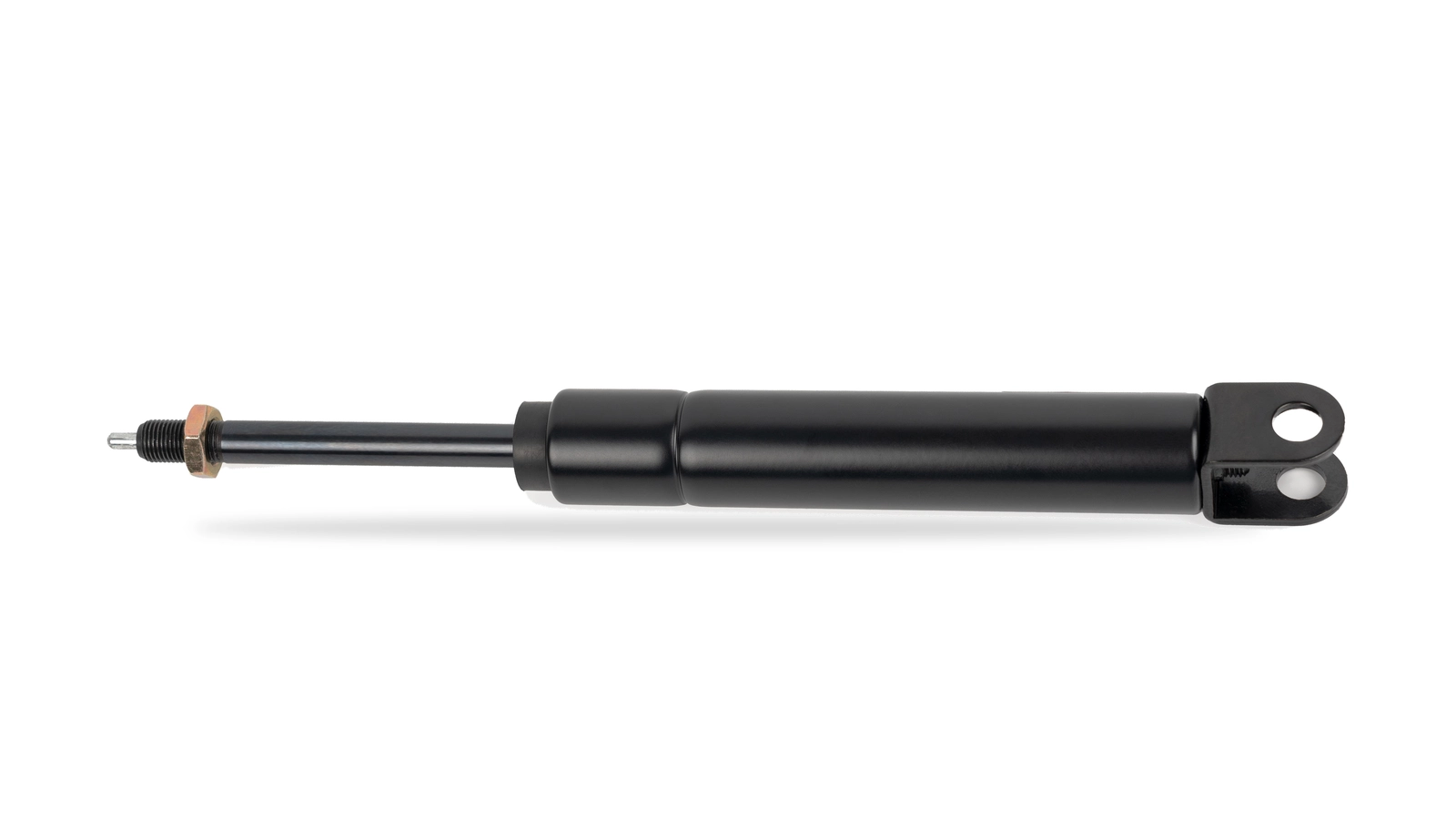
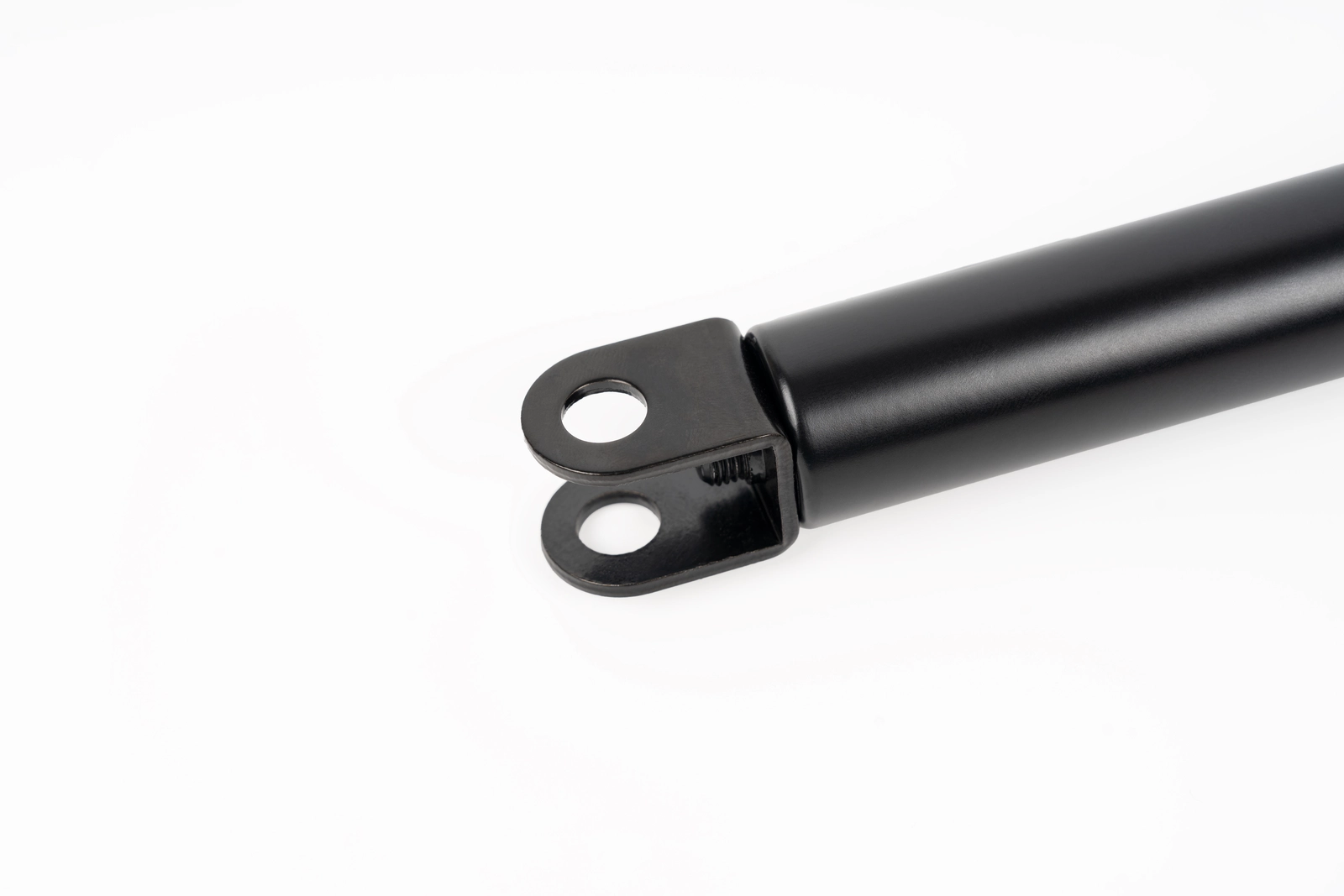
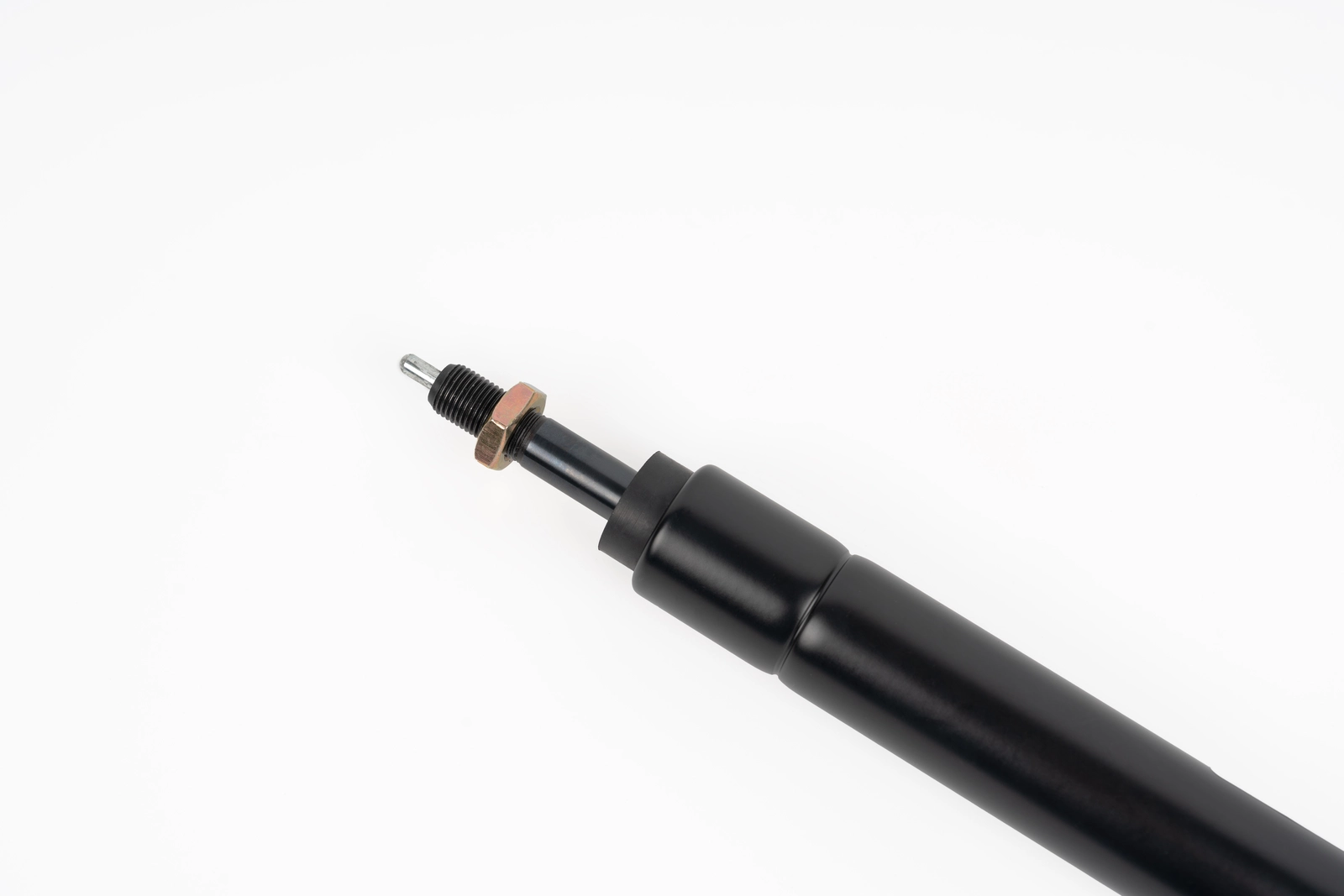
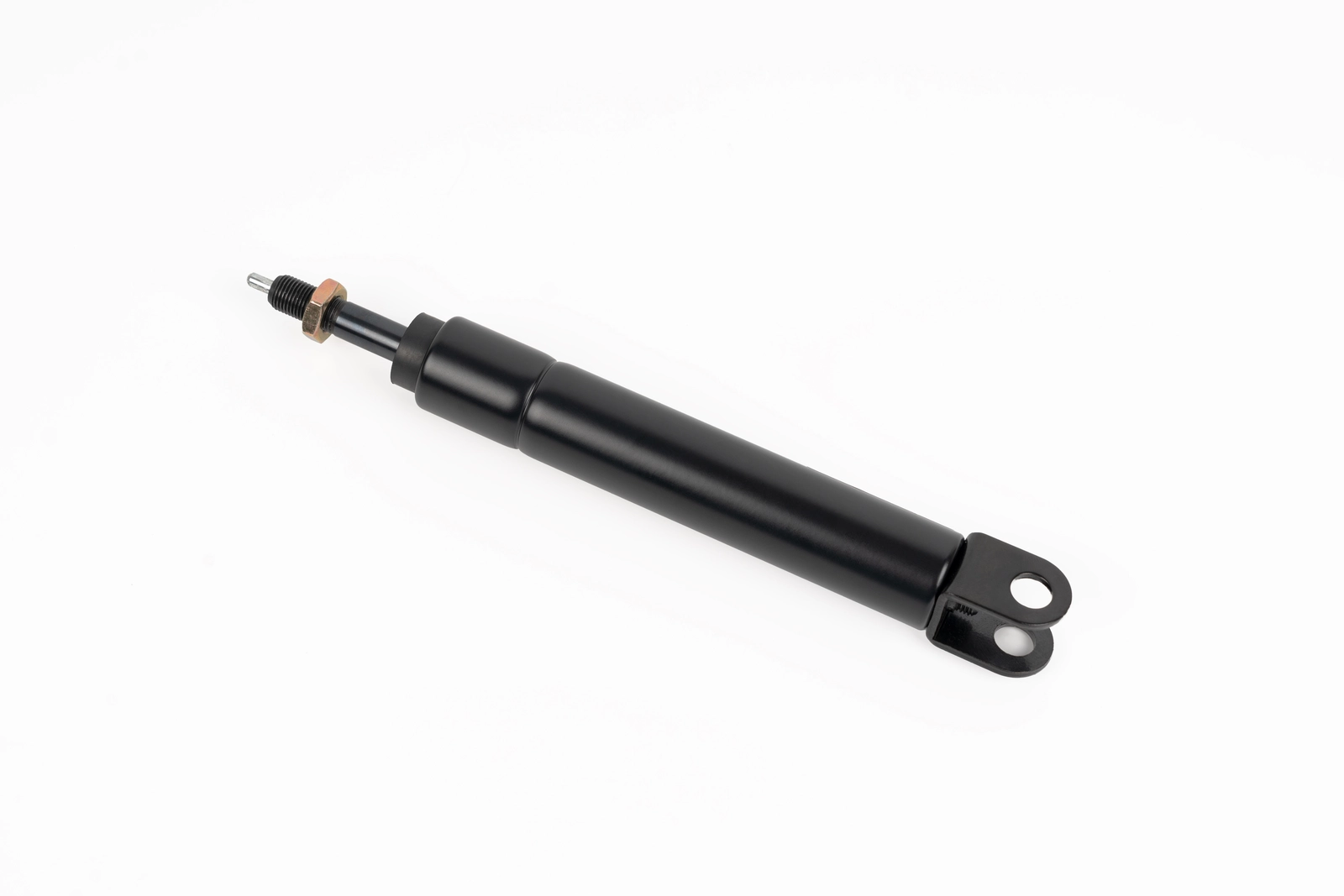
Newton’s adjustable locking gas spring pairs a stable force curve with direct lever or remote cable actuation for ergonomic chairs, recliners, couches and equipment.
- Locks in both compression and extension with gentle elastic give
- Stable force curve and low spring-rate ratio across the full travel
- Maximum stroke length relative to cylinder body size
- 10 mmPiston rod diameter
- 10–500 mmStroke length
- 50–1,000 NForce rating
- 90–650 mmOuter tube length
Overview
Stepless positioning with cushioned support
An elastic locking gas spring lets users adjust angles, heights and tilt positions smoothly and lock them at any point along the travel. Depressing the valve pin at the end of the piston rod opens an internal channel, allowing pressurized nitrogen gas to flow across the piston so the rod extends or retracts with controlled assistance.
Once the release pin is let go, the piston valve seals shut and holds the rod in both compression and extension. Because the cylinder is charged strictly with compressible nitrogen gas, the locked strut provides a slight, spring-like resilience when weight is applied. That shock-absorbing give makes it an ideal chair gas spring for passenger seats, office task chairs, recliners, medical couches and adjustable headrests.
Configured as a remote release gas spring with a pull-switch cable or operated directly via a lever, it sits within our wider lockable gas spring portfolio alongside oil-filled rigid locking struts for applications that require zero deflection.
-
Actuate the release
Trigger the valve pin directly with a lever or remotely via a pull-switch cable to open the internal gas passage.
-
Position smoothly
Guide the backrest, seat or panel to the desired angle. The stable gas force assists the movement with minimal effort.
-
Release for an elastic hold
Let go of the actuator to close the valve. The nitrogen charge locks the rod in both directions with comfortable, cushioned give.
Key Features
Why choose an elastic lockable gas spring
-
Bi-directional elastic lock
Holds in both compression and extension while providing a gentle, shock-absorbing cushion under load.
-
Stable force curve
A low spring-rate ratio keeps the operating force consistent and predictable from full extension to full compression.
-
Maximum stroke ratio
Delivers the longest possible stroke travel for a given cylinder length, fitting neatly into tight envelopes.
-
Flexible release & mounts
Pair with metal or plastic single-ear, double-ear or remote pull-switch fittings tailored to your mechanism.
Specifications
Elastic lockable gas spring specifications
Every adjustable locking gas spring is manufactured to order. Use the parameters below to guide your design and we will confirm the exact build.
| Parameter | Range / options | Notes |
|---|---|---|
| Lock type | Elastic locking, both directions | Holds at any point in the stroke with cushioned resilience under compression and tension. |
| Force characteristic | Stable force curve (low k-ratio) | Low spring-rate ratio and maximum stroke-to-cylinder efficiency. |
| Fill | Pressurised nitrogen gas | Clean gas charge provides both lifting assistance and elastic shock absorption. |
| Piston rod diameter | 10 mm | Robust 10 mm rod engineered for dependable cycling and lateral stability. |
| Stroke length (S) | 10–500 mm | Specified to match the exact travel range your mechanism requires. |
| Outer tube (D × wall) | 22 × 1.0 / 26 × 1.0 / 27 × 1.5 / 28 × 1.5 mm | Cylinder tube profile selected to suit force rating and spring-rate ratio. |
| Outer tube length (B1) | 90–650 mm | Compact cylinder body length for maximum stroke output. |
| Extended length (B) | To order | Centre-to-centre or overall length with the piston rod fully extended. |
| Force (F1) | 50–1,000 N | Factory-charged to your exact nominal extension force requirement. |
| Finish colours | Black, silver grey, white, chrome, light grey | Protective rod and tube coatings for visual integration and wear resistance. |
| End fittings | Single-ear, double-ear, pull-switch | Available in metal for heavy-duty frames or plastic for lightweight assemblies. |
| Release | Direct release pin or remote cable actuator | Unlock directly via a local lever/cam or remotely with a pull-switch cable. |
Schematic, Force Diagram & Dimension Key
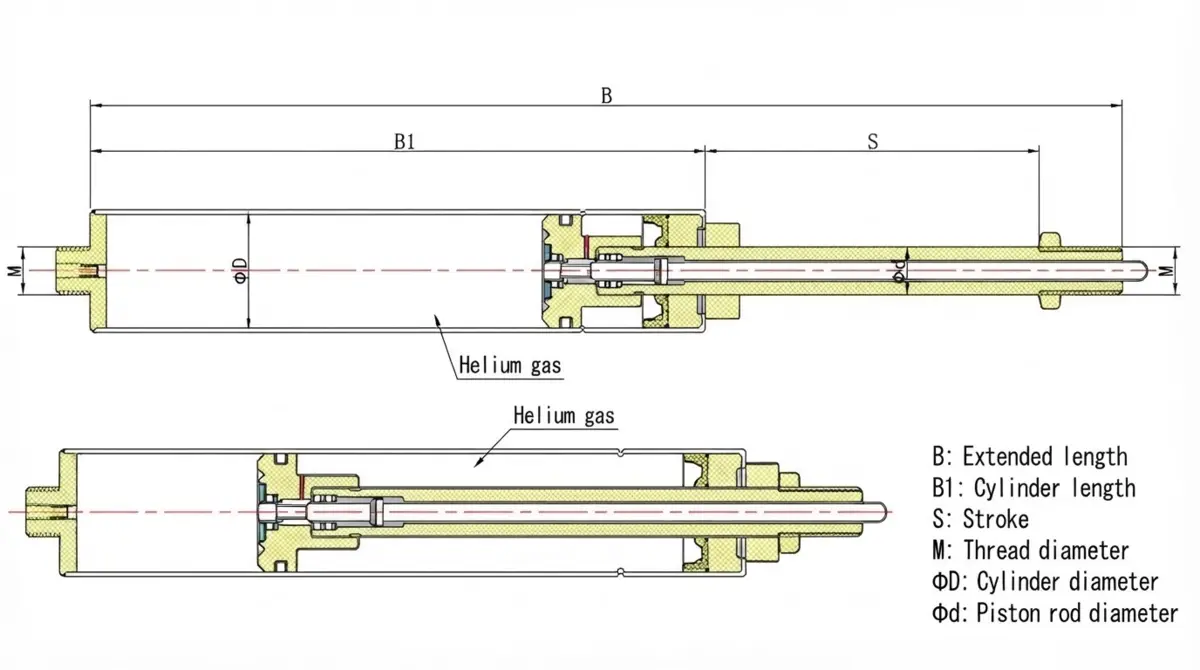
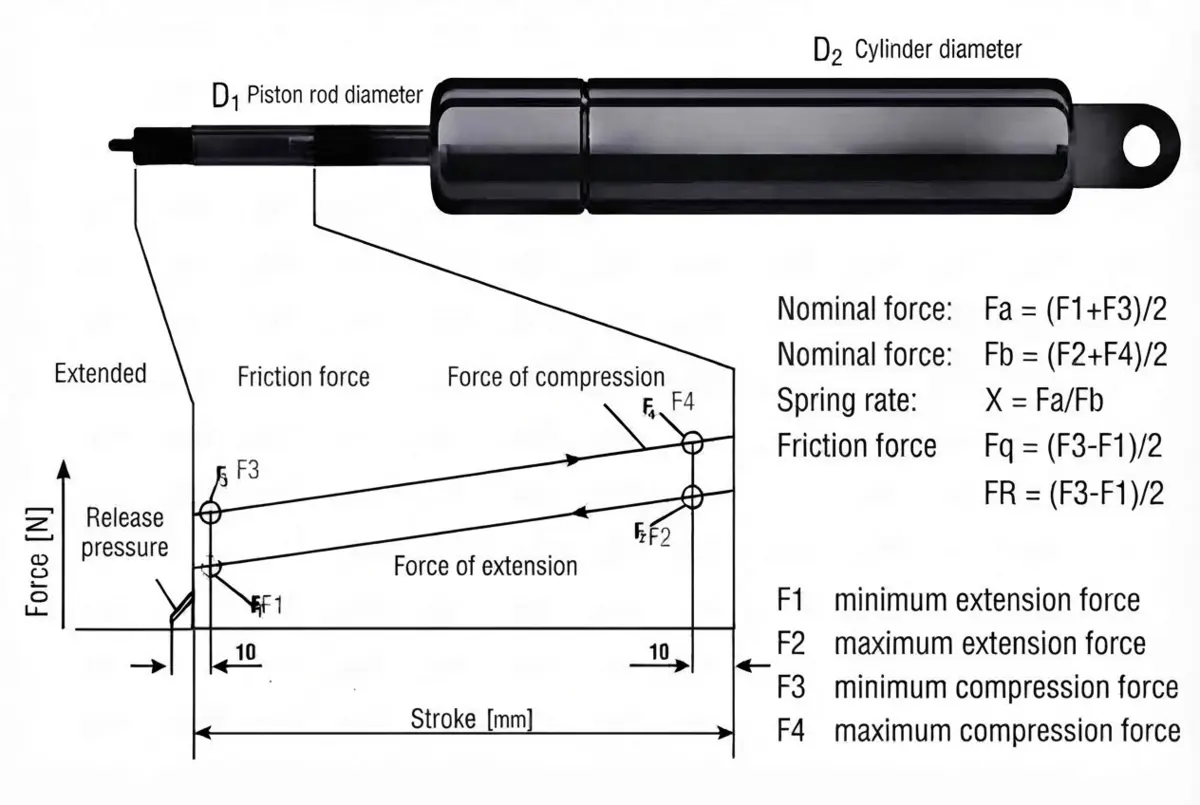
Reference the dimensional drawing and force progression curve below alongside the symbol key when specifying your remote release gas spring.
- B
- Extended lengthOverall length, rod fully extended
- B1
- Cylinder body lengthLength of the outer tube
- S
- StrokePiston rod travel distance
- D
- Cylinder diameterOutside diameter of the outer tube
- d
- Rod / hole diameterPiston rod diameter (or eyelet through-hole)
- M
- Mounting threadThread size for end fittings & release pin
- F1
- Extension forceNominal gas force with the rod extended
- F2
- Compressed forceGas force with the rod fully compressed
- FR
- Friction forceDynamic resistance difference between directions
Configuration
Build it your way
Select the surface finish, mounting connectors and release actuation that fit your seating or equipment layout.
-
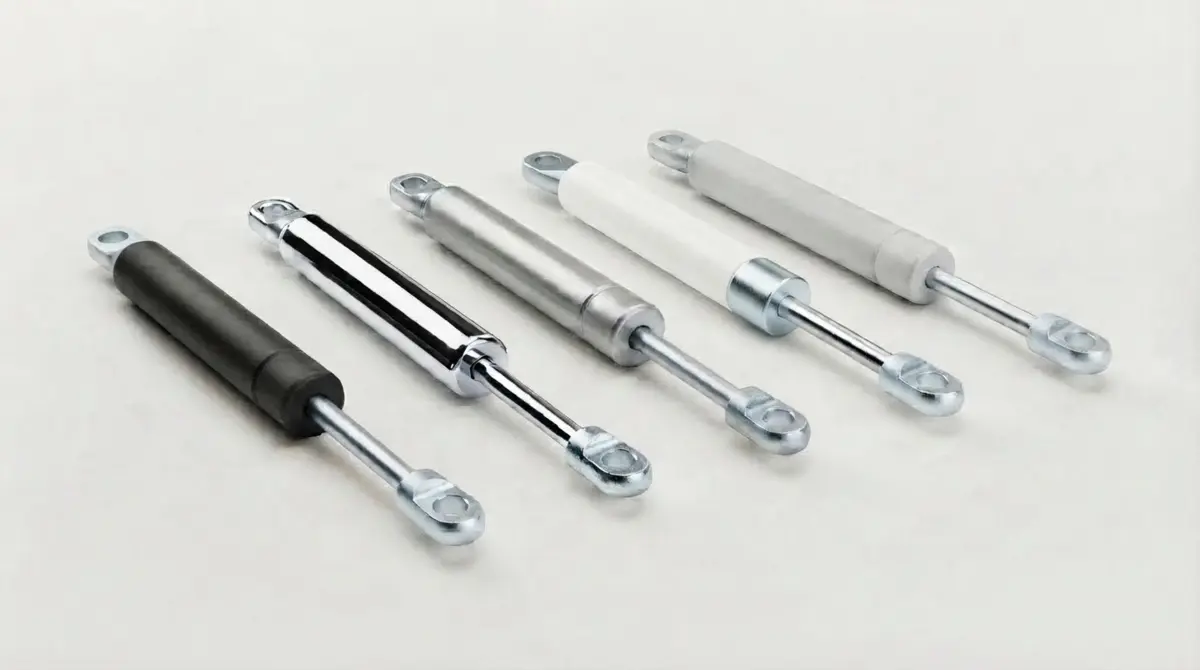
Finish & Colour
Coordinate exposed struts with your furniture frame, cabin interior or medical housing.
- Black or bright chrome
- Silver grey or light grey
- Clean white for medical & clinical kit
-
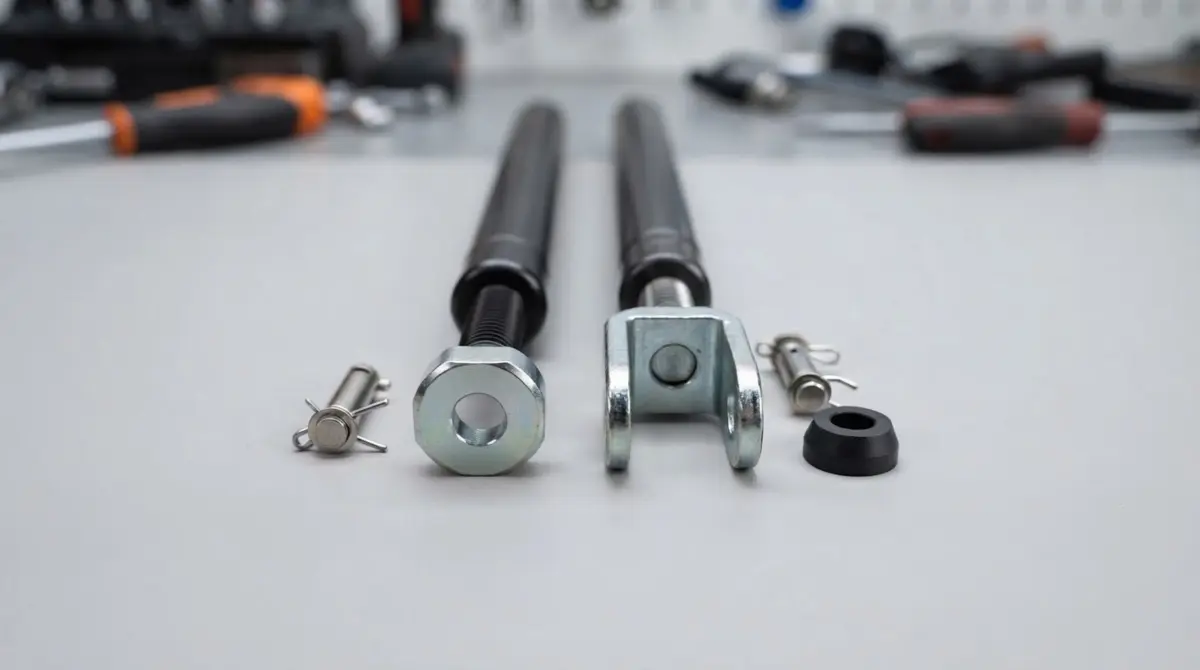
End Fittings
Choose from a wide range of metal or plastic connectors to suit your pivot pins and brackets.
- Single-ear eyelet: compact single-hole pivot mount
- Double-ear clevis: twin-fork bracket for balanced shear support
- Metal or plastic options, plus custom OEM designs
-
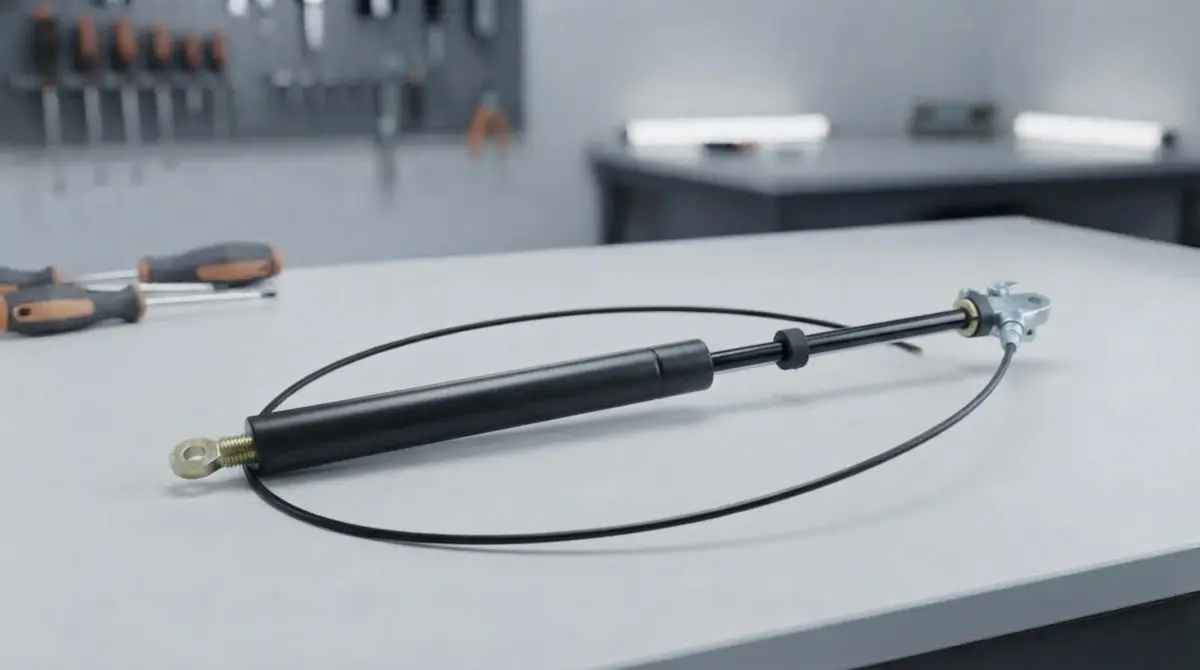
Release Mechanism
Configure a direct lever contact or a remote release gas spring setup for easy reach.
- Direct release pin triggered by a local paddle or cam
- Pull-switch actuator head for Bowden cable routing
- Remote hand lever, under-seat paddle or push-button control
What does “elastic locking” mean?
Because the cylinder is filled with compressible nitrogen gas rather than an oil locking column, the piston holds its set position in both directions while allowing a gentle, cushioned bounce under load. That slight give absorbs jolts and makes seating, headrests and backrests much more comfortable for the user.
How does a remote release gas spring work?
A pull-switch actuator head attaches to the threaded rod end and connects via a flexible Bowden cable to a hand lever, paddle or push-button. Pulling the cable depresses the internal valve pin to unlock the strut, and releasing the control immediately closes the valve to lock the rod in place.
When should I choose an elastic locking gas spring over a rigid one?
Choose an elastic lockable gas spring when you want shock absorption, user comfort and maximum stroke from a compact cylinder—such as in office or passenger chair backrests, recliners and massage tables. If your mechanism cannot tolerate any spring-back under load, choose our extension rigid locking gas strut, our compression rigid locking gas spring, or the double tube rigid locking version. If mid-stroke locking is not needed, see our standard compression gas spring.
Why is the stroke-to-cylinder ratio better on an elastic locking gas spring?
Without an internal floating oil piston or separate hydraulic chamber taking up space inside the tube, more of the cylinder body is available for piston rod travel. That also keeps the gas volume high, resulting in a low spring-rate ratio and a steady, predictable force across the entire stroke.
Which end fittings and release styles are available?
We supply single-ear eyelets, double-ear clevises and pull-switch cable heads in either steel/metal for high-load durability or engineered plastic for weight-sensitive mechanisms. You can actuate the release pin directly with a local cam or lever, or remotely with a cable assembly.
What details do you need to quote an adjustable locking gas spring?
Please share the stroke length (S), extended length (B) or tube length (B1), required extension force (F1), finish colour, end-fitting types, release method (direct pin or remote cable) and estimated order volume. If you have a sketch or CAD drawing of the application, send that over too.
Get a quote for elastic lockable gas springs
Send your stroke, force, release preference and mounting details. We’ll recommend the ideal spec and reply with a clear quote.
Prefer email? info@newtonmatic.com